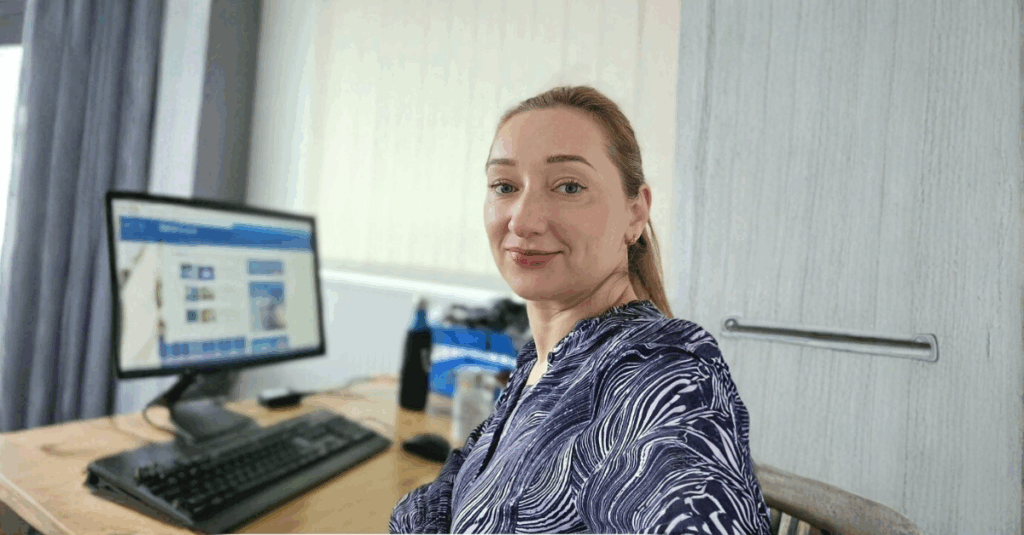
Tetiana Levchenko is a corporate communications leader with over 15 years of experience in change and crisis communications. Three and a half years ago, she had a settled life in Ukraine: a new apartment, an exciting job offer, family, friends and big plans for the future.
Then the war struck, and overnight, she had to leave to find safety and start from scratch. Through the UK’s support programme for Ukrainians and the help of friends, she was able to build a new life in the UK and land a new role.
Then, the company where she’d taken on a role faced challenges and periods of uncertainty, and was placed into liquidation, with a potential sale still under consideration. Drawing on her own experience of what it means to lead with empathy, Tetiana helped guide the organisation and its 1,500 employees through this new period of turbulence. Tetiana’s story is one of managing a deep crisis both personally and professionally.
Hi Tetiana, and thank you for sharing your story. Can you take us back to before the war? What was your life like in Ukraine?
Before the war, I had what I thought was a stable and well-defined career path. I’d built my professional life in corporate communications – first in journalism, then leading internal and external communications for some of Ukraine’s largest steel and mining companies, with over 25,000 employees.
I progressed quickly, and before the war, I was leading a team of 19 people, managing everything from crisis communications to large-scale rebranding and change programmes.
I had big ambitions to build stronger, more transparent organisations, to mentor younger communicators, and to see these Ukrainian industries recognised globally for their resilience and innovation. Like many people, I thought I had time. Then the war changed everything overnight.
Having led organisations through significant change and crisis, you then found yourself in the middle of one personally. How did your experience help you cope with that?
In communications, you learn early that crisis management is about two things: act fast and stay calm. You can’t control the chaos, but you can control your response. When the war began, I had to apply those same principles to my own life. Make quick decisions and focus on what truly matters. My professional experience taught me to break a huge, frightening situation into smaller, manageable steps. That mindset helped me get my family to safety, find reliable information, and stay focused even when everything around us felt uncertain.
What was going through your mind in those first few days when you had to leave Ukraine and start over?
It was pure survival mode, but very structured and rational. No panic, no drama, just a cold head and clear priorities. I remember thinking, “Get somewhere safe. The rest can wait.”
There was no long-term plan at that point, just the next few hours and days. You stop thinking about careers or belongings. You focus on the basics: warmth, food and safety.
Thanks to friends and colleagues around the world, I quickly drew a vision of my next steps. And because I was abroad alone with two children, one just 18 months and the other 12, I knew there was no time for hesitation. I had to act fast.
Once in the UK, reality sank in. I had left behind my home, my husband, my parents, my friends, and everything familiar. It’s a kind of loss you can’t prepare for. But step by step, you start to rebuild, finding a place to rent, learning to drive on the left, navigating a new culture, and gradually making a new life.
How did you rebuild your life in the UK?
Rebuilding meant starting from scratch. A new country, culture and professional network. Many people told me I’d need UK experience to get a similar job. I didn’t let that stop me. Communication is a universal skill, and that gave me confidence.
I started by upskilling through local courses, networking, and applying for roles where my experience could add value. Within a few months, I joined Liberty Steel UK as a Communications Manager.
Going from leading a large team to being a solo communications professional was a huge adjustment, but one of the best experiences of my career. I had to master every part of the job hands-on: managing internal platforms, design, video editing, writing corporate content and running events.
It taught me that leadership isn’t about the size of your team, it’s about the impact you make. The biggest challenge, however, was finding my voice again. Learning how to express myself in a new cultural context while staying authentic.
In your recent role in the UK, your company went into liquidation, and you helped lead employees through a difficult time. How did you approach that, and did you draw on your personal experience?
Absolutely. I know how fear, uncertainty, and frustration can paralyse people. So from day one, my focus was on transparency, honesty, and empathy.
We made sure our 1,500 employees always knew what was happening through consistent updates, FAQs, and face-to-face sessions with leadership. We also kept our wellbeing campaigns, launched leadership training, and continued recognition programmes even during the toughest times.
Because communication isn’t just about sharing information, it’s about helping people feel seen, heard, and supported. Having lived through a crisis myself, I became more empathetic as a communicator. When you’ve experienced such uncertainty, you understand how much reassurance and simple kindness means.
During that time, you rolled out a 10k Steps Challenge, which was a powerful way to connect and energise employees. What impact did it have?
It was incredible, and honestly, quite emotional. Many assumed that once the company entered liquidation, all engagement activities would stop. Instead, we carried on, including doing our annual Steps Challenge.
It wasn’t just about walking; it was about solidarity. People from all sites, and even former colleagues, joined in. This year, participation rose by 21% compared to last year with 12 teams, 16 solo walkers, and over 30 million steps logged.
More importantly, it gave everyone a reason to connect, laugh, and keep moving – physically and mentally. I received so many messages from people saying it helped them stay positive and motivated.
Sometimes the smallest initiatives have the biggest emotional impact.
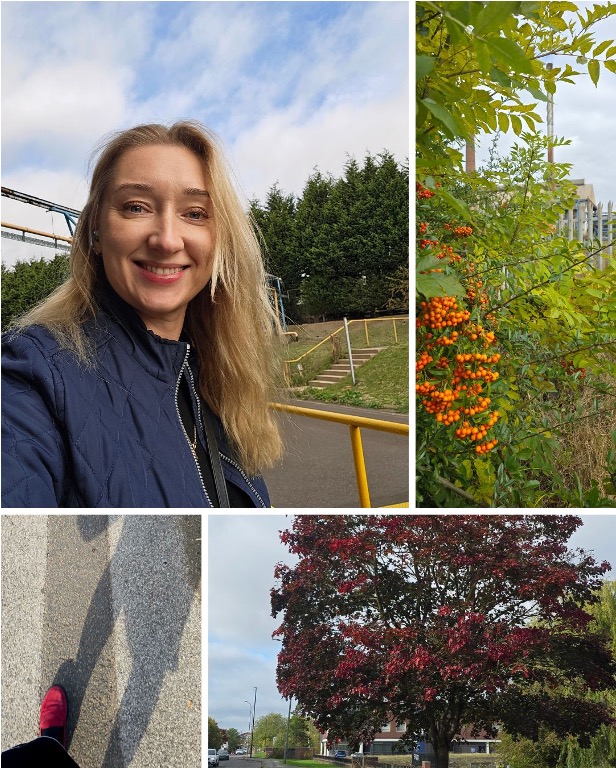
Tetiana taking part in the Steps Challenge – a month-long, 10,000 steps a day health challenge to keep employees moving and motivated, physically and mentally.
What, in your view, makes communication truly effective during times of crisis?
Three things: clarity, consistency, and compassion.
- Clarity – because people need to understand what’s happening in plain language
- Consistency – because silence or mixed messages creates fear
- Compassion – because during uncertainty, facts matter, but feelings matter even more
The best communicators balance honesty with hope. They don’t sugarcoat reality, but they don’t leave people hopeless either. That’s how trust is built.
How has your journey changed the way you see work and life?
It changed everything. I used to see communication as a professional skill; now I see it as a human one. The way we speak, listen, and connect can genuinely change lives. Personally, I’ve learned to value time, relationships, and purpose much more. Professionally, I focus more on why and how we communicate. Every message has to matter. Every interaction is a chance to build trust and a sense of belonging. And I’ve learned that resilience isn’t about being unbreakable, it’s about finding the strength to rebuild again and again.
Finally, how would you encourage others who may be facing a major crisis?
Don’t fight the change, navigate it. When life feels uncertain, focus on the next small step. You don’t have to see the whole path to move forward. Ask for help. Stay curious. And keep your sense of humour, even when it feels impossible. Every challenge carries a lesson, and sometimes the hardest detours lead to the most meaningful destinations.

Thank you so much, Tetiana. That’s great advice for us all. You can connect with Tetiana on LinkedIn